
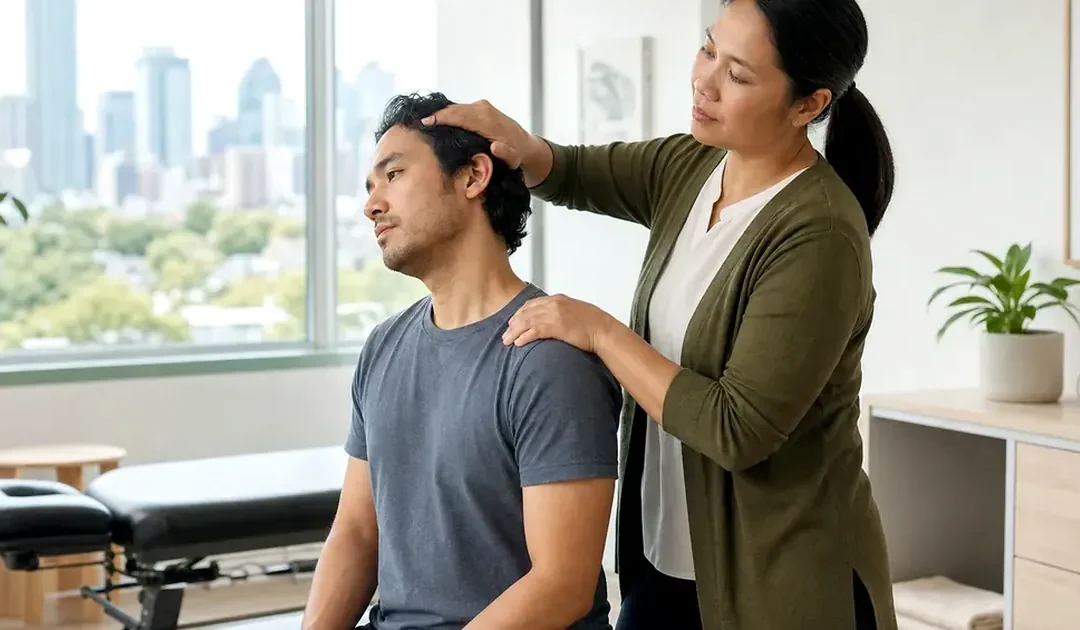
In brief: Before taking action regarding “normal spinal curvatures,” it is helpful to clarify the goal: reduce discomfort, restore mobility or help prevent a recurrence.
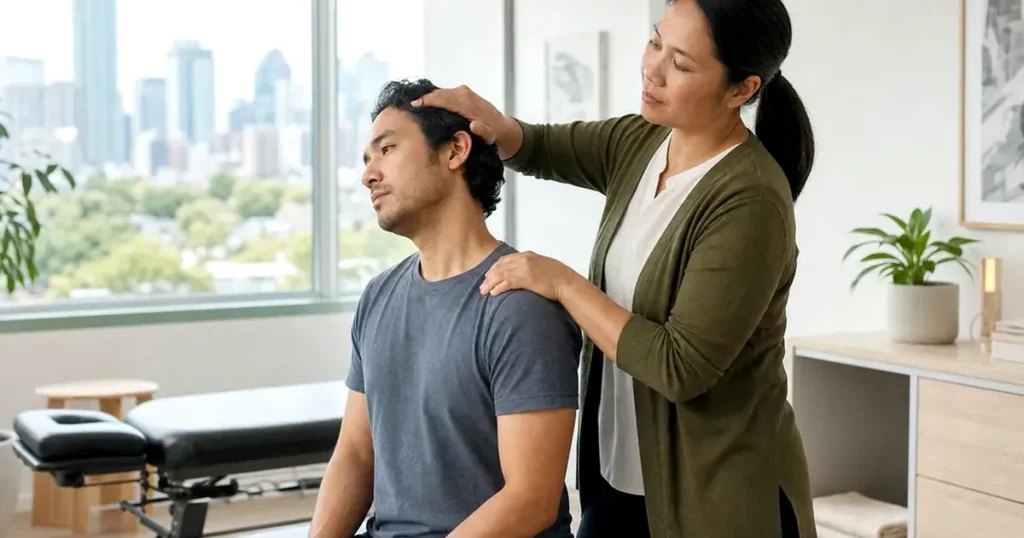
Key points to remember
- The cause cannot be confirmed based on a single symptom.
- A clinical assessment helps check mobility, function and warning signs.
- Recommendations should be gradual, personalized and adjusted according to the patient’s response.
Understanding the spine’s natural curvatures helps clarify the importance of balanced posture and appropriate musculoskeletal support. The spine is not designed to be perfectly straight: its natural shapes allow it to absorb shock, distribute loads and support everyday movements. When these curvatures are maintained, the body functions more efficiently and harmoniously. If you would like a professional assessment, a chiropractic consultation near me can provide a complete, personalized analysis of your spinal alignment.
Natural curvatures: an essential balance
The spine consists of several sections that adopt specific curvatures to maintain the body’s balance. These curvatures help reduce the stress placed on the vertebrae and discs during movement, walking and even sitting. They also play an important role in protecting the nervous system by promoting better distribution of forces.
However, these natural shapes can change over time. Prolonged postures, sedentary lifestyle habits or certain injuries can lead to compensations. When balance is disrupted, the body adapts, sometimes at the expense of comfort or mobility, which highlights the importance of a comprehensive assessment.
Cervical lordosis
Located in the neck, cervical lordosis is a forward curvature that helps support the weight of the head. This curvature facilitates rotation and side-bending movements while reducing pressure on the cervical structures.
When this curvature is reduced or accentuated, muscle tension may develop. A prolonged change may also lead to increased fatigue, stiffness or reduced range of motion, especially during repetitive everyday activities.
Thoracic kyphosis
Thoracic kyphosis is located in the middle of the back and has a backward curvature. It helps protect the rib cage and supports the vital organs while also contributing to trunk stability.
Pronounced kyphosis can affect overall postural alignment. Over time, this may influence breathing, balance and the distribution of loads across the other sections of the spine.
Lumbar and sacral curvatures
The lumbar region is characterized by lordosis, which supports the lower back. This curvature plays a central role in distributing the body’s weight, particularly while standing and bending. Balanced lumbar lordosis helps reduce pressure on the intervertebral discs.
The sacral curvature, in contrast, is more fixed because the sacral vertebrae are fused. It serves as an anchor between the spine and pelvis, thereby contributing to overall stability and the transfer of forces between the upper and lower body.
Functional vs. structural curvatures
Functional curvatures are influenced by the muscles, posture and daily habits. They can vary depending on the positions adopted and are often reversible with appropriate adjustments.
Structural curvatures, on the other hand, result from more permanent anatomical changes. They require a professional assessment to determine the best strategies for supporting mobility and everyday comfort.
Commonly observed deviations
During a chiropractic examination, certain deviations are commonly observed, such as hyperlordosis or excessive kyphosis. These variations can change how forces are distributed across the spine.
Identifying these imbalances makes it possible to adapt recommendations and better understand the compensations made by the body. This approach aims to support more functional and comfortable posture.
- Choose a chiropractor recognized by the Ordre des chiropraticiens du Québec.
- Ask questions about the assessment of your posture and curvatures.
- Prioritize a relationship based on trust and regular follow-up.
Table of the main curvatures
Each of the spine’s different curvatures has a specific role. The following table shows their distribution and location to help explain their function in overall balance.
| Type of curvature | Region |
|---|---|
| Lordosis | Cervical and lumbar |
| Kyphosis | Thoracic |
| Sacral curvature | Sacrum |
To better understand the practical aspects of care and planning, you can read our article explaining How Chiropractors Determine a Patient’s Treatment Plan. It outlines the steps used to adapt recommendations to each situation.
For more information about financial considerations, visit our page on Chiropractor Prices in Montreal.
Professional reference: Ordre des chiropraticiens du Québec
“A balanced spine is an essential pillar of human mobility.”
Key takeaway
The spine’s natural curvatures play a fundamental role in posture, mobility and load distribution. When they are maintained, they support the body’s overall function and contribute to everyday comfort.
- The spine has several essential curvatures.
- Variations can influence balance and posture.
- A professional assessment helps provide a better understanding of these changes.
Jean-Talon Chiropractic Clinic has supported many patients who want to better understand their posture and spinal curvatures. Through a personalized and attentive approach, our team helps you support your spine’s natural balance. Contact us today for a free consultation.
Frequently Asked Questions
Spinal curvatures often raise questions. Here are answers to the most common questions to help explain their role and how they may change.
Can spinal curvatures change over time?
Yes, they can change depending on posture, lifestyle habits and repeated stresses placed on the spine.
Does an abnormal curvature always cause pain?
Not necessarily, but it may increase the risk of muscle tension or long-term compensations.
Can a chiropractor correct a curvature?
A chiropractor can help improve mobility, muscle balance and overall posture through a personalized approach.
Is an examination necessary to assess my curvatures?
Yes, a professional examination makes it possible to assess alignment accurately and provide appropriate recommendations.
Does daily posture influence spinal curvatures?
Yes, the positions adopted at work or at home directly affect spinal balance.
Can exercises support the spine’s natural curvatures?
Certain targeted exercises may help strengthen the supporting muscles and maintain more balanced posture.
Useful resources and links
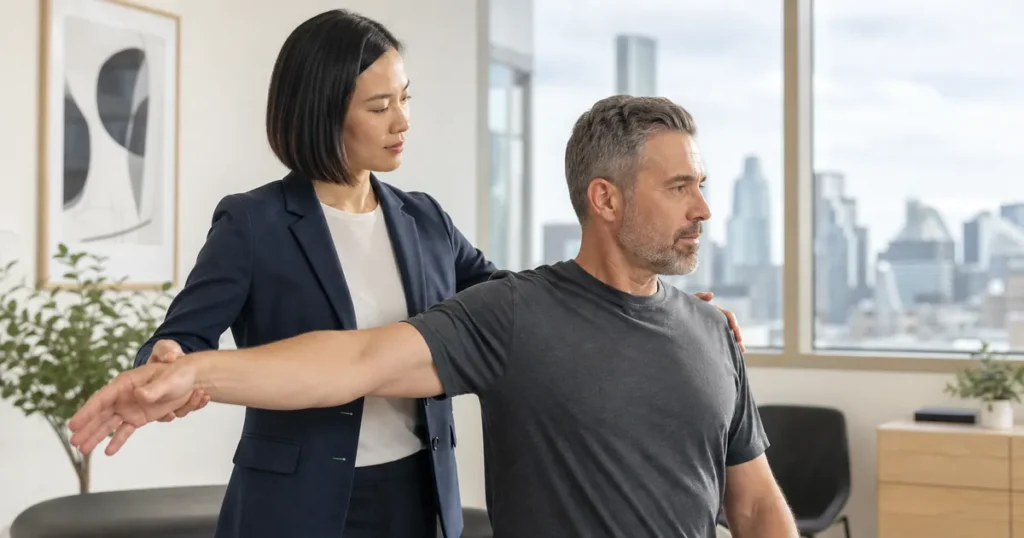
When should you request an assessment in Montreal?
If the problem described in this article persists, returns or limits your activities, an individualized assessment can help clarify the factors involved. See our page on spinal health, or contact the clinic to find out whether an appointment is appropriate for your situation.
Frequently asked questions
When should I consult for normal spinal curvatures?
Consult when symptoms persist, return, limit your activities or concern you. An assessment helps check the probable cause and appropriate options.
Is chiropractic care appropriate for every situation related to “normal spinal curvatures”?
No. The examination helps identify contraindications and determine whether chiropractic care, monitoring or a referral is more appropriate.
Which signs require prompt assessment?
Sudden weakness, significant loss of sensation, chest pain, shortness of breath, major trauma or rapid worsening warrant urgent assessment.
Related articles
- Spinal Biomechanics: A Simple and Useful Explanation
- 7 Scientific Principles That Explain Chiropractic Effectiveness
- The Fascinating Evolution of Chiropractic Care Through Time
Note: This content is for informational purposes and does not replace a clinical assessment. If you have sudden, severe or concerning symptoms, contact the appropriate emergency services.

Chiropraticienne à Montréal dans le quartier Saint-Léonard.
Je dirige la clinique Chiropratique Jean-Talon.
J’ai complété mon doctorat en chiropratique à l’Université du Québec à Trois-Rivières en 2002
Membre de l’Ordre des chiropraticiens du Québec
Membre de l’Association des Chiropraticiens du Québec
Membre de l’Association Chiropratique Canadienne
Membre de l’Association de Protection Chiropratique Canadienne
Attestation de formation continue annuelle en radiologie (2002 à présent)