

In brief: For “posture during pregnancy,” the most helpful changes are generally simple and gradual; an exercise should not cause sharp or worsening pain.

Key points to remember
- The cause cannot be confirmed based on an isolated symptom.
- A clinical assessment helps check mobility, function and warning signs.
- Recommendations should be gradual, personalized and adjusted according to the patient’s response.
After a long day at work, the body is subject to many stresses, and pregnant women are no exception. The physiological changes associated with pregnancy increase pressure on the spine and joints, often causing tension in the back, neck and shoulders. To receive appropriate support and effectively relieve these discomforts, explore our neck and back care in Montreal, provided by trained and experienced professionals.
Why posture changes during pregnancy
As the abdomen grows, the centre of gravity shifts forward, requiring the body to adapt to maintain balance. This adaptation increases the curve of the lower spine, placing more pressure on the lower-back muscles and potentially causing neck and lower-back pain. If posture is not properly supported, this tension can become chronic and limit everyday mobility.
In addition, increased body weight combined with fluid retention and hormonal changes affects joint flexibility. Ligaments become more lax, which can increase postural instability. Regular follow-up, including targeted exercises and professional advice, can help manage these physical changes and prevent persistent pain.
The areas under the greatest strain
During pregnancy, certain areas of the body are particularly heavily used. The lower back supports most of the additional weight, while the deep abdominal muscles are called upon to stabilize the trunk. The neck and shoulders may also be affected, especially if the expectant mother maintains prolonged seated or standing positions.
Chronic muscle fatigue can develop quickly if no adjustments are made to everyday movements. Prolonged tension encourages diffuse pain that, if not addressed, can become persistent discomfort limiting movement and quality of life.
Aggravating factors
Several factors can intensify posture-related pain and tension during pregnancy. Carrying heavy loads, insufficient physical activity, and poor ergonomics at work or home increase pressure on the spine. In addition, a sedentary lifestyle or prolonged static positions contribute to muscle fatigue and postural imbalances.
Daily habits, such as wearing unsuitable footwear or failing to take active breaks, can also worsen these discomforts. Identifying and correcting these factors can reduce the risk of chronic pain and provide optimal support for the body throughout pregnancy.
7 essential tips to support your posture
To minimize tension and maintain optimal comfort, it is important to adopt appropriate practices from early in pregnancy. Strengthening the core muscles, adopting proper posture and incorporating active breaks support stability and limit pain. These tips are preventive strategies based on chiropractic recommendations.
- Strengthen the core muscles: Targeted exercises for the back, abdominals and deep muscles help stabilize the spine, thereby reducing pressure on the lower back and improving overall posture.
- Adopt proper sitting posture: Keeping your feet flat on the floor, your knees at right angles and your lower back supported with a cushion helps maintain optimal alignment and reduce muscle fatigue.
- Avoid prolonged positions: Alternating between sitting and standing helps limit muscle stiffness and promote blood circulation, supporting better daily recovery.
- Wear suitable footwear: Choosing shoes that provide good arch and foot support is important for preventing tension in the back and legs and maintaining comfort while moving around.
- Use support accessories: Pregnancy support belts, ergonomic cushions or lumbar supports can reduce tension on the spine and improve everyday comfort.
- Include gentle stretches: Targeted stretches for the back, hips and neck promote mobility, reduce tension and contribute to overall well-being throughout pregnancy.
- Consult a specialist: Chiropractic care adapted to pregnancy offers personalized follow-up, helps identify imbalances and supports prevention of lower-back and neck pain.
Chiropractic consultations during pregnancy
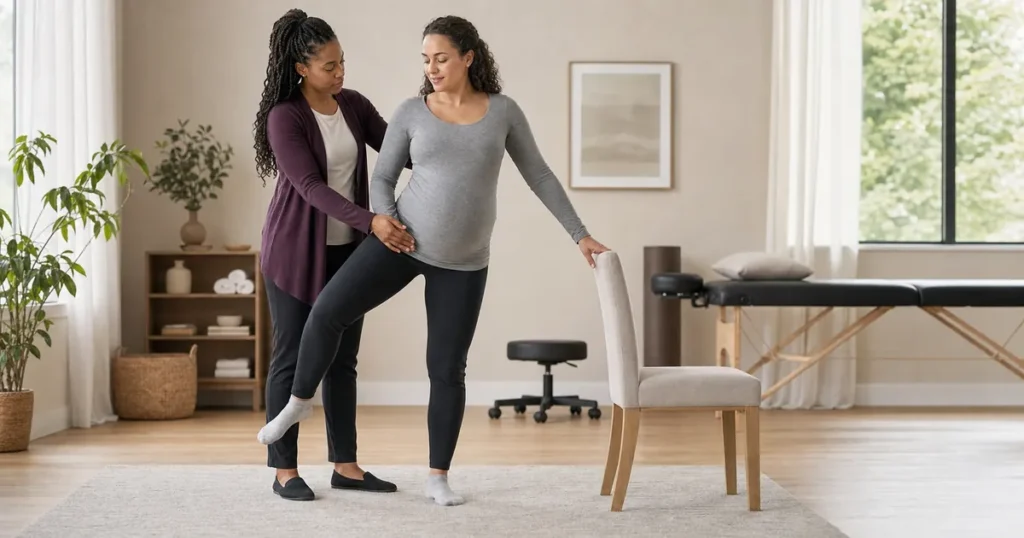
Chiropractors trained to care for pregnant women use gentle, safe techniques adapted to each trimester. Regular assessment helps identify muscle or joint tension and apply precise adjustments to improve spinal alignment.
These targeted interventions support mobility, reduce discomfort and contribute to overall well-being. Chiropractic adjustments may also make certain everyday activities easier by improving posture and reducing muscle fatigue.
Posture during pregnancy: advice box
💡 Tip:
- Learning about physiological changes during pregnancy helps you better understand your body’s needs and adapt your daily movements.
- When choosing a chiropractor, prioritize training and experience in caring for pregnant women to support safe and appropriate care.
- Use ergonomic cushions or supports to reduce pressure on the spine and improve comfort during prolonged activities.
- Drink water regularly and practise deep breathing to reduce muscle tension and promote overall relaxation.
Signs of fatigue and when to consult
It is important to pay attention to the body’s signals. Excessive fatigue, persistent pain or numbness in the limbs indicate that it is time to consult a specialist. Early assessment can help prevent complications and improve everyday comfort.
Signs to watch for include intense lower-back or neck pain, tingling in the arms or legs, stiffness that does not improve with rest, and difficulty maintaining proper posture. An appropriate chiropractic consultation can help identify possible contributing factors and suggest personalized options.
| Common muscle tension | When to consult a specialist |
|---|---|
| Lower-back fatigue after standing for a long time. | Pain that persists for several days despite rest. |
| Neck stiffness after carrying the baby or lifting weight. | Numbness, tingling or pain radiating into the arms. |
| Moderate hip or lower-back pain during prolonged walking. | Severe pain or reduced mobility despite using support accessories. |
Additional practical tips to support your body
In addition to exercises and professional adjustments, certain everyday actions can improve comfort and reduce muscle tension. Avoid standing for too long, alternate the side on which you carry loads, and choose gentle activities such as swimming or prenatal yoga.
Restful sleep in ergonomic positions, maintaining good hydration and adopting varied postures throughout the day complete these preventive strategies. These simple habits contribute to effective overall care for a comfortable and more peaceful pregnancy.
Key takeaways
- Strengthening exercises and gentle stretches are important for supporting the body and preventing tension.
- Posture naturally changes during pregnancy, but it can cause fatigue and pain if it is not supported.
- Chiropractic care adapted to pregnancy can support alignment and reduce discomfort.
- Using ergonomic accessories and adopting good habits can reduce everyday discomfort.
- Regular consultation with a specialist provides safe, personalized follow-up throughout a comfortable pregnancy.
Are you looking to relieve tension and pain during pregnancy?
Jean-Talon Chiropractic Clinic supports pregnant women in managing lower-back, neck and muscle pain. With gentle, personalized techniques, we have helped many patients regain comfort and mobility. Contact us today for a free consultation suited to your needs.
Frequently Asked Questions
Is it safe to see a chiropractor during pregnancy?
Yes. Chiropractors trained to care for pregnant women use gentle, safe techniques adapted to each trimester. This can support spinal alignment while minimizing risks for the mother and baby.
Which exercises can help improve posture during pregnancy?
Exercises targeting the core muscles, deep abdominals and lower back can be particularly helpful. Gentle stretches and activities such as prenatal yoga or swimming also support mobility and reduce tension.
How can I tell whether my pain requires a chiropractic consultation?
If you experience persistent pain, numbness or difficulty maintaining proper posture, it is recommended that you consult a specialist promptly. Early assessment can help identify the likely cause and appropriate options.
Resources and useful links
When to request an assessment in Montreal
If the problem described in this article persists, returns or limits your activities, an individualized assessment can help clarify the contributing factors. Visit our page about Jean-Talon Chiropractic Clinic, or contact the clinic to determine whether an appointment is appropriate for your situation.
Frequently asked questions
When should I consult for posture during pregnancy?
Consult a professional when symptoms persist, return, limit your activities or concern you. An assessment can help check the probable cause and appropriate options.
Is chiropractic care appropriate for every situation related to “posture during pregnancy”?
No. The examination helps identify contraindications and determine whether chiropractic care, monitoring or a referral would be more appropriate.
Which signs require prompt assessment?
Sudden weakness, significant loss of sensation, chest pain, shortness of breath, major trauma or rapid worsening warrant urgent assessment.
Related articles
- Chiropractic Care and Pregnancy: 7 Benefits You Should Know
- Children’s Posture: The Most Common Mistakes
- 7 Benefits of Chiropractic Care for Pregnant Women
Note: This content is for information purposes and does not replace a clinical assessment. In the presence of sudden, severe or concerning symptoms, contact the appropriate emergency services.

Chiropraticienne à Montréal dans le quartier Saint-Léonard.
Je dirige la clinique Chiropratique Jean-Talon.
J’ai complété mon doctorat en chiropratique à l’Université du Québec à Trois-Rivières en 2002
Membre de l’Ordre des chiropraticiens du Québec
Membre de l’Association des Chiropraticiens du Québec
Membre de l’Association Chiropratique Canadienne
Membre de l’Association de Protection Chiropratique Canadienne
Attestation de formation continue annuelle en radiologie (2002 à présent)