
In brief: The question of “physical stress and the spine” calls for a nuanced answer: your history, examination and progress help guide appropriate options.
Key takeaways
- The cause cannot be confirmed based on an isolated symptom.
- A clinical assessment helps check mobility, function and warning signs.
- Recommendations should be gradual, personalized and adjusted according to the patient’s response.
Physical stress directly affects the health of your spine, especially when it is associated with heavy loads, repetitive movements or prolonged postures. These stresses, often taken for granted in everyday life, can gradually lead to muscle tension, reduced mobility and persistent discomfort. Understanding how your spine responds to these demands can help you act sooner and adopt habits that are kinder to your body. In this article, we explore the common effects of physical stress on the spine, along with natural approaches to better protect your back day after day.
What is physical stress?
Physical stress refers to all the mechanical demands placed on the body during daily or work-related activities. Unlike psychological stress, it acts directly on musculoskeletal structures, including the muscles, joints and spine. When repeated or poorly managed, this type of stress can exceed the body’s natural ability to adapt.
In the short term, physical stress can cause muscle fatigue or temporary stiffness. Over the longer term, it can contribute to postural compensations and imbalances that increase the risk of discomfort or functional limitations.
Common sources
There are many sources of physical stress, often linked to modern lifestyle habits. Carrying heavy loads, prolonged static postures and repetitive movements are particularly common in manual and sedentary work environments.
Intensive or poorly supervised sports activities can also contribute to this stress when they do not follow principles of gradual progression and recovery. Over time, these cumulative demands place constant pressure on the spine.
How the body responds
In response to physical stress, the body activates natural protective mechanisms, such as increased muscle tone. This response is intended to stabilize spinal segments exposed to excessive loads.
However, when these reactions persist, they can lead to muscle fatigue and reduced joint flexibility. These adaptations then become less effective and may intensify discomfort.
How does physical stress affect the spine?
The spine is designed to support loads and allow a wide range of movement. However, when it is exposed to constant physical stress, its ability to adapt may be challenged. Spinal structures respond differently depending on the nature, intensity and duration of the demands.
A clear understanding of these effects can make it easier to recognize warning signs and take action before more significant limitations develop.
Impact on the discs
Intervertebral discs play an essential shock-absorbing role between the vertebrae. Excessive or uneven pressure can limit their ability to absorb impacts effectively.
Over time, this overload may reduce their natural elasticity, which affects overall spinal mobility and increases the sensation of stiffness.
Effect on stabilizing muscles
The deep muscles that support the spine are constantly engaged to maintain balance and posture. Prolonged physical stress can cause these muscles to fatigue and reduce their effectiveness.
When these muscles are weakened, other structures compensate, increasing the load on certain joints and encouraging localized tension.
Consequences for mobility
Reduced mobility is one of the most common effects of chronic physical stress. It often appears as morning stiffness or difficulty performing certain movements.
Gradually, the range of joint motion may decrease, affecting movement quality and the ability to perform daily activities without discomfort.
Common signs that your spine is responding to stress
When the spine is exposed to excessive physical stress, certain signals may appear repeatedly. These symptoms are often subtle at first, but they tend to intensify if the demands continue.
Common signs include recurring pain, stiffness upon waking, occasional locking or fatigue in the lower back after exertion. Recognizing these signals can help you act before the problem becomes chronic.
Habits that worsen physical stress
Certain everyday habits can increase the stress placed on the spine without us being fully aware of it. Repeated day after day, these behaviours contribute to greater mechanical loading of the spinal structures.
Identifying these aggravating factors is an important step in reducing unnecessary strain and supporting better spinal health over the long term.
Poor ergonomics
Inadequate ergonomics, whether at work or at home, increases the pressure placed on the spine. Prolonged static postures put excessive demands on certain segments.
Over time, these positions encourage muscle tension and postural imbalances.
Inadequate technique during activities
Incorrect movement technique, particularly when lifting objects or performing physical activities, can overload certain spinal structures.
This repeated overload increases the risk of joint fatigue and reduced functional mobility.
Lack of recovery
Recovery is essential to allow tissues to adapt to physical demands. Without adequate rest, the spine remains under constant strain.
This lack of recovery limits the body’s ability to stabilize itself and maintain optimal mobility.
- Change positions regularly to avoid prolonged postures.
- Include gentle mobility and stretching exercises in your daily routine.
- Take frequent breaks during demanding physical or work-related activities.
When should you consult a professional?
It is recommended that you consult a professional when discomfort persists despite simple adjustments. Pain that returns frequently or limits your movements deserves particular attention.
An assessment can help clarify the source of the strain and identify areas of overload or compensation.
Signs that warrant an assessment
Persistent pain, marked stiffness or a noticeable decrease in mobility are common indicators. These signs suggest that the spine may no longer be adapting effectively.
Early care can often help limit progression toward more significant discomfort.
What an assessment can identify
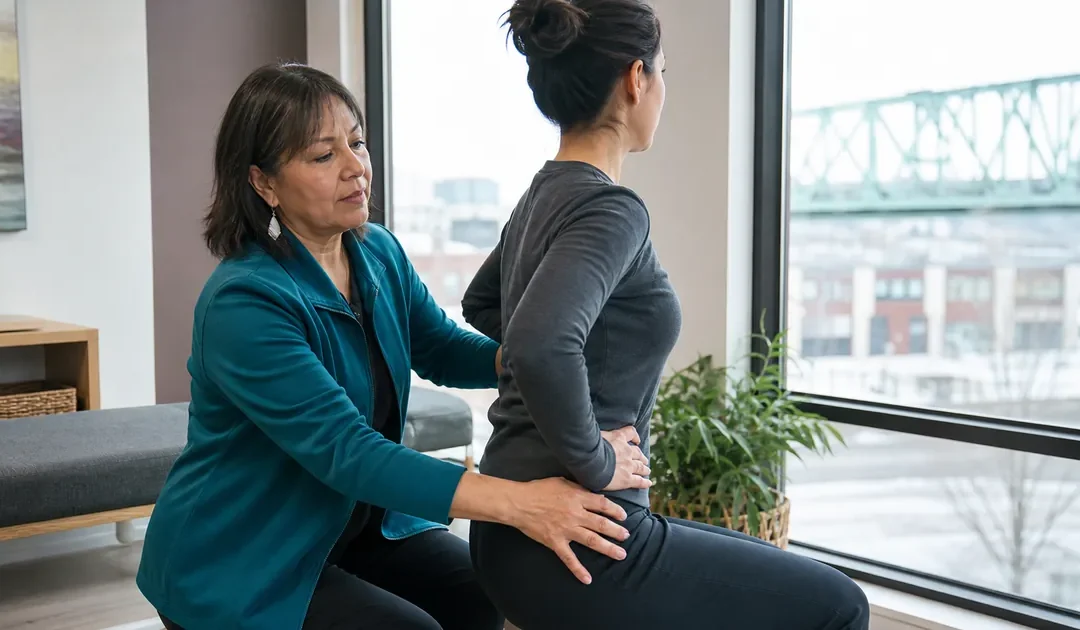
A chiropractic assessment analyzes joint mobility, posture and movement patterns. It can also identify compensations made by the body.
This information helps guide personalized recommendations intended to improve spinal function.
Summary table
The following table presents the main physical stress factors, their possible effects on the spine and simple measures to limit their impact in daily life.
| Stress factor | Possible effects | Preventive measure |
|---|---|---|
| Heavy loads | Increased pressure on the discs | Proper technique and breaks |
| Prolonged postures | Stiffness and muscle tension | Change positions frequently |
| Repetitive movements | Joint overuse | Alternate tasks |
Frequently Asked Questions
Physical stress and its effects on the spine raise several questions. Here are clear answers to the questions most frequently asked by people concerned about this issue.
Can physical stress really affect the spine?
Yes. When it is constant, physical stress can reduce mobility and increase muscle tension around the spine.
Are poor postures really a problem?
Over the long term, they increase the load on certain spinal structures and encourage imbalances.
Can chiropractic care help manage this type of stress?
It aims to improve mobility, reduce tension and optimize joint function.
Should you consult someone even without intense pain?
Yes. A preventive assessment may help address imbalances before more significant discomfort develops.
Is rest enough for recovery?
Rest is essential, but it should be accompanied by healthy movement and posture habits.
Are mobility exercises beneficial?
They help maintain joint range of motion and reduce stiffness associated with physical stress.
Key points
Physical stress directly affects the health of your spine, especially when it is repetitive or prolonged. By adopting better habits and recognizing early signs, you may help preserve mobility and everyday comfort.
- Repeated physical demands can reduce spinal mobility.
- Simple daily adjustments can limit the effects of physical stress.
- A chiropractic assessment can help you better understand and manage these demands.
Clinique Chiropratique Jean-Talon supports many patients experiencing discomfort associated with physical stress. We have helped people in similar situations improve their mobility and quality of life. Contact us today for a free consultation.
Helpful resources and links
Ordre des chiropraticiens du Québec

When should you request an assessment in Montreal?
If the issue described in this article persists, returns or limits your activities, an individualized assessment can help clarify the factors involved. Visit our page on spinal health, or contact the clinic to find out whether an appointment is appropriate for your situation.
Frequently asked questions
When should you consult someone about physical stress and the spine?
Consult someone when symptoms persist, return, limit your activities or concern you. An assessment can help check the probable cause and appropriate options.
Is chiropractic care appropriate for every situation involving “physical stress and the spine”?
No. The examination helps identify contraindications and determine whether chiropractic care, monitoring or a referral is more appropriate.
Which signs require prompt assessment?
Sudden weakness, significant loss of sensation, chest pain, shortness of breath, major trauma or rapid worsening warrant urgent assessment.
Related articles
- The Risks of Ignoring Persistent Pain After Physical Activity
- Whiplash: Symptoms and Possible Natural Treatments
- 9 Sports Injuries Chiropractic Care May Help Relieve
Note: This content is for information purposes and does not replace a clinical assessment. If you have sudden, severe or concerning symptoms, contact the appropriate emergency services.

Chiropraticienne à Montréal dans le quartier Saint-Léonard.
Je dirige la clinique Chiropratique Jean-Talon.
J’ai complété mon doctorat en chiropratique à l’Université du Québec à Trois-Rivières en 2002
Membre de l’Ordre des chiropraticiens du Québec
Membre de l’Association des Chiropraticiens du Québec
Membre de l’Association Chiropratique Canadienne
Membre de l’Association de Protection Chiropratique Canadienne
Attestation de formation continue annuelle en radiologie (2002 à présent)